
Best Meat Thermometers (Instant-Read)
An instant-read thermometer is the cheapest upgrade that makes grilling safer, because color and grill marks do not tell you meat is done. The specs that separate them are read speed, stated accuracy, whether you can calibrate it, and how well it survives a wet, greasy grill-side life. This guide is for every cook who does not own one yet, or owns a slow one. FSIS says most food thermometers are accurate within 2 to 4°F (USDA FSIS), so the features that let you check and re-check the reading matter as much as the maker's accuracy figure.
Jump to section
What we look for
Read speed
a fast read means less time with the lid open and your hand over the heat.
Stated accuracy
the closer the reading, the less you need to overcook for safety.
Calibration
a thermometer you can check and adjust stays useful for years.
Probe length and thickness
a longer probe keeps your hand off the heat; a thin tip reads thin cuts and leaves a smaller hole.
Water resistance
grill-side thermometers get splashed, greasy and rinsed; an IP rating tells you how much they can take.
Display readability
a backlight and auto-rotating screen help at night and for left-handed cooks.
- Sources: manufacturer product pages, manuals and warranty terms, plus the USDA FSIS kitchen thermometer guidance.
How to choose the right meat thermometer
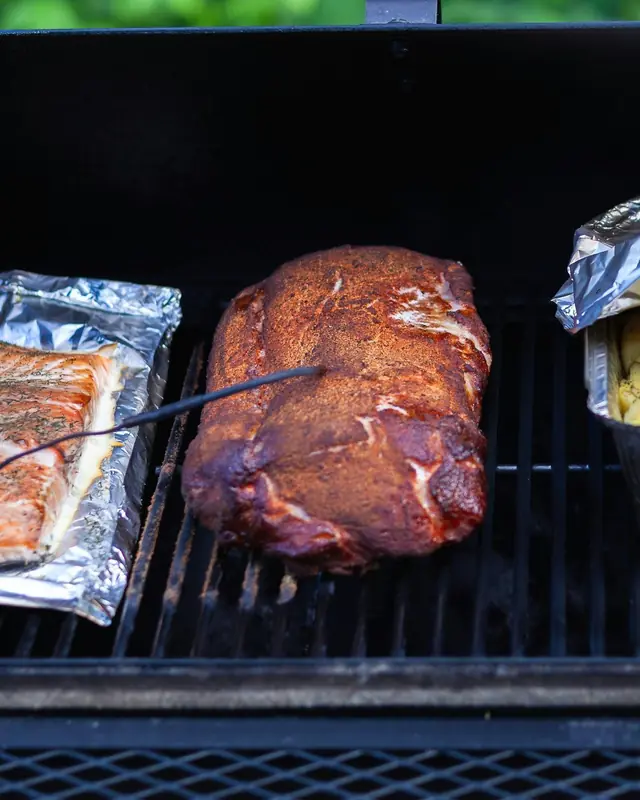
Read speed and accuracy first, then the features that make it pleasant to use. For long smokes, a leave-in wireless thermometer is the better tool.
Read speed
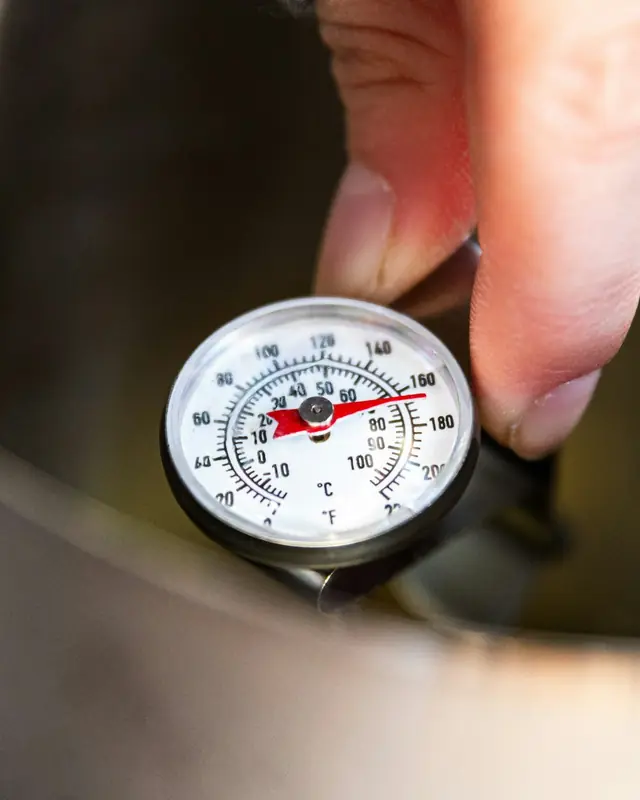
USDA FSIS lists typical read times by type: thermocouples 2 to 5 seconds, thermistors about 10 seconds, instant-read dial thermometers 15 to 20 seconds (USDA FSIS). Compare the maker's stated read time in the table, and remember it is a lab figure, not a promise in every cut. Speed matters most on thin cuts such as burgers and chops, where the sensor sits close to the surface and a slow probe keeps the lid open longer.
Stated accuracy
FSIS says most food thermometers are accurate within 2 to 4°F (USDA FSIS). Makers list their own accuracy, often for a specific temperature band; read the fine print in the listing or manual.
Calibration
FSIS notes that thermocouples and wireless models can be calibrated, and some thermistor and dial models can; oven-cord and fork types cannot (USDA FSIS). Our guide on how to use and calibrate a meat thermometer walks through the ice-water check.
Probe length and thickness
FSIS gives minimum insertion depths by type: about 1/4 inch for a thermocouple and 1/2 inch for a thermistor (USDA FSIS). A thin tip makes it easier to hit the center of burgers and chops from the side. For whole poultry, FSIS says to check the innermost thigh, the innermost wing and the thickest part of the breast (USDA FSIS), which a longer probe makes easier.
Water resistance
Check the listed IP rating: the higher the second digit, the more water it is rated for. Read the manual for cleaning instructions before you put it under the tap. An IP rating describes the housing as the maker rates it; follow the cleaning section of the manual for the probe itself.
Display readability
Look for a backlit display, large digits and a screen that rotates when you hold it at an angle. Check what battery it uses and whether it switches off by itself.
Tips for using your meat thermometer
- Check it in ice water: the stem at least 2 inches into stirred ice water for 30 seconds should read 32°F (USDA FSIS).
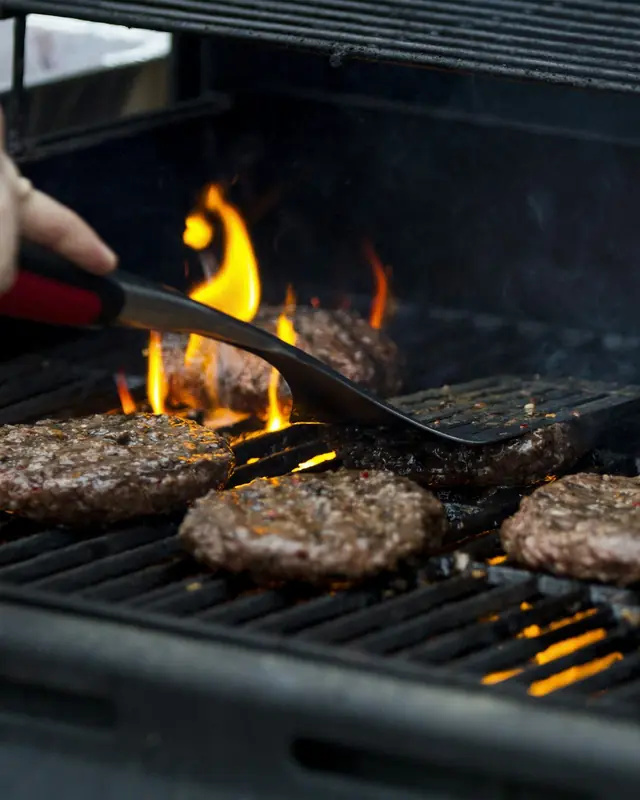
- Insert into the thickest part, away from bone, fat and gristle; for thin patties and chops, go in from the side (USDA FSIS).
- Keep our grilling temperature chart handy for the target numbers.
- FSIS says a thermometer that can't be adjusted may need replacing once it stops reading right (USDA FSIS).
- FSIS says bimetal dial thermometers aren't suitable for food under 3 inches thick (USDA FSIS), so look at the tip design before you buy one for patties.
FAQ
How do I calibrate a meat thermometer?
Stir ice into a glass of water, lower the stem at least 2 inches without touching the sides and wait 30 seconds; 32°F is the right reading. In boiling water at sea level, expect 212°F (USDA FSIS).
Where do I insert it?
Aim the tip at the thickest part and keep it off bone, fat and gristle. For a whole bird, take three readings: innermost thigh, innermost wing and the thickest part of the breast (USDA FSIS).
Which type reads fastest?
Speed depends on the sensor type: a thermocouple needs 2 to 5 seconds, a thermistor about 10 seconds and an instant-read dial 15 to 20 (USDA FSIS).
How accurate are they?
According to FSIS, most thermometers land within 2 to 4°F of the true temperature (USDA FSIS).
Related
-
Buying guide
Best Wireless and Bluetooth Meat Thermometers
Leave-in probes compared on range, probe count, ambient sensors and battery.
-
Guide
Grilling Temperature Chart: Safe Internal Temperatures for Every Meat
The USDA numbers for every meat, poultry and seafood, with rest times.
-
Guide
How to Use (and Calibrate) a Meat Thermometer
Probe placement, insertion depth and two easy accuracy checks.
-
Buying guide
Best Gas Grills
Burners, cooking area, grates and warranty for propane and natural gas grills.
-
Buying guide
Best Pellet Grills
Controller type, cooking area, hopper size and searing heat, side by side.

Get the Grill-Side Card
A printable card with the USDA safe temperatures and an 8-point pre-cook safety check. It costs nothing and is sized to stick on the fridge.